Udawalawe Elephant Transit Home: What It’s Really Like to Watch 60+ Baby Elephants Feed (2026 Visitor Guide)
Watch 60+ orphaned baby elephants feed at the Udawalawe Elephant Transit Home. Real 2026 feeding times, entrance fees, ethics and insider tips most blogs skip.
Shashika Sandaruwan
Tour Guide and tour article writer with 10 years of field experience
If you’ve read three other blog posts about the Udawalawe Elephant Transit Home and still don’t know what time to actually show up, you’re not alone. Most guides recycle the same paragraph about “orphaned baby elephants” and call it a day. This one doesn’t. We’ve combined official visitor data, on-the-ground reviews, and details almost no other article mentions — from the exact feeding-time discrepancies between operators to why you should bring a 150mm zoom lens — so this can genuinely be the last article you need to read before you go.
The Udawalawe Elephant Transit Home (often shortened to “ETH”) sits just outside Udawalawe National Park in southern Sri Lanka, and it’s one of the few elephant encounters in the country you can visit without feeling guilty about it. There’s no riding, no bathing show, no circus routine — just orphaned calves being bottle-fed and prepared to return to the wild. On a good day during peak calf season, you can count anywhere from 40 to over 60 elephants moving between the feeding pen and the lake behind it.
Here’s everything you need to know: the real feeding schedule, current entrance fees, how it compares to Pinnawala, and the insider tips that make the difference between watching from the back of a crowd and actually seeing something.
What Is the Udawalawe Elephant Transit Home?
The Udawalawe Elephant Transit Home was established in 1995 by Sri Lanka’s Department of Wildlife Conservation (DWC), under the 29th Amendment to the Fauna and Flora Protection Ordinance. It was built for one specific purpose: to raise orphaned wild elephant calves without turning them into tourist attractions, so they can eventually be released back into the wild.
The need is grimmer than most visitors realize. Human-elephant conflict is one of the leading causes of elephant deaths in Sri Lanka — some estimates put it at up to three elephants killed per week — and calves are frequently the ones left behind. The very first elephant to arrive at the transit home was a calf named Komali, found near Anuradhapura. Since then, more than 200 orphaned elephants have passed through the facility, with over 100 successfully rehabilitated and released back into Udawalawe’s wild herds, where several have gone on to breed (details documented on the transit home’s Wikipedia entry).
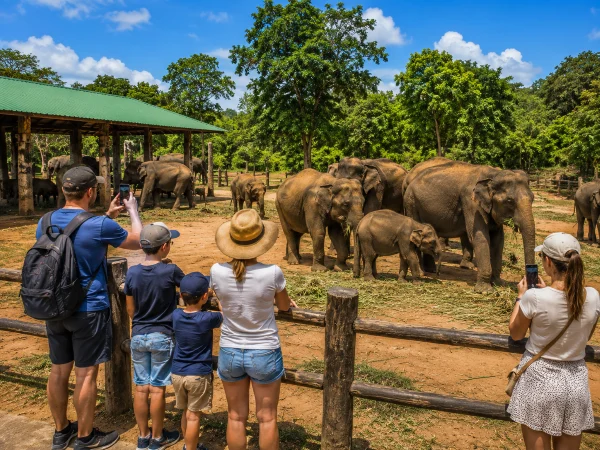
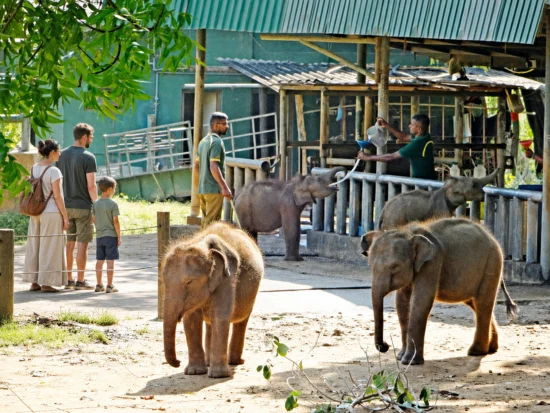
What sets the Elephant Transit Home apart from almost every other elephant experience in Sri Lanka is what it deliberately doesn’t offer. There’s no riding, no bathing photo-ops, no performances. Human contact is kept to a functional minimum — staff feed and monitor the calves, but visitors watch from behind a roped barrier roughly 15 metres away. The goal isn’t a memorable selfie; it’s an elephant that never gets comfortable enough around humans to forget how to be wild. Calves typically stay until they’re around five years old and capable of independent feeding, at which point they’re released into Udawalawe National Park itself.
What It’s Really Like to Watch the Baby Elephants Feed
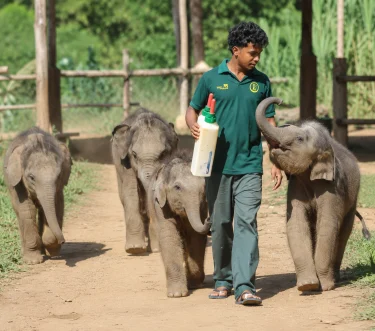
Nobody tells you about the ten minutes before the feeding actually starts, and it’s arguably the best part. If you arrive early, you’ll often see dozens of calves make their way across from a small island in the lake behind the facility, wading and half-swimming toward the feeding pen as feeding time approaches. It’s chaotic, a little comical, and far more memorable than the feeding itself.
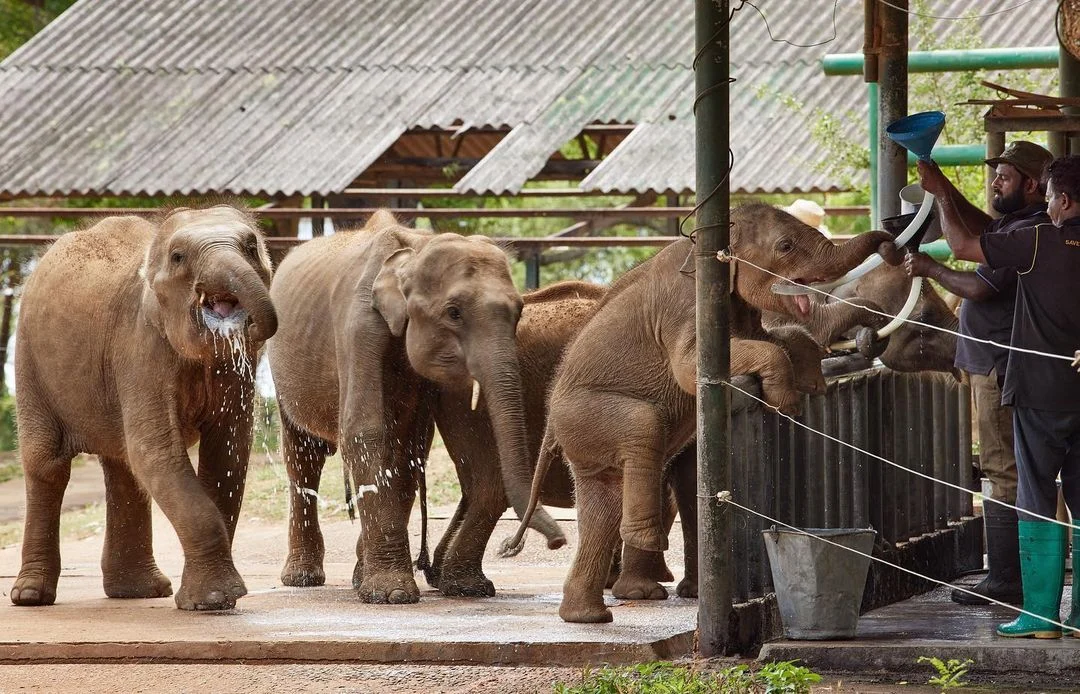
Once it begins, staff members hand out plastic bottles and hoses filled with warm milk formula — heated using a solar-powered system installed with support from Dilmah Conservation — and the calves crowd in, jostling for a turn. Some are barely a few weeks old and unsteady on their feet; others are pushy four-year-olds trying to get seconds. Staff use sticks or gentle prods to manage the crowd of powerful, excited young animals, which can look a little rough to visitors unfamiliar with the context, but it’s standard herd management rather than mistreatment — nobody is allowed to touch, ride, or interact directly with the elephants at any point.
You’ll hear a lot of trumpeting, a fair bit of splashing, and the occasional scuffle over a milk bottle. It’s loud, it’s fast-moving, and it’s over in about 20 to 30 minutes. Bring patience for the crowd on the viewing platform — more on that below.
Udawalawe Elephant Transit Home Feeding Times & Schedule (2026)
The facility feeds its calves every three hours, and four of those sessions are open to the public. This is the schedule most consistently reported by the Department of Wildlife Conservation and long-standing tour operators:
Session
Time
Duration
Morning
9:00 AM
20–30 minutes
Midday
12:00 PM
20–30 minutes
Afternoon
3:00 PM
20–30 minutes
Evening
6:00 PM
20–30 minutes
A tip most articles skip: a few tour operators and blogs list slightly different times — 10:30 AM, 2:30 PM, and 6:00 PM — likely reflecting an older or seasonal schedule. Times can shift slightly depending on the season and park management decisions, so it’s worth confirming with your driver or guide on the morning of your visit rather than trusting any single blog post (including this one) as gospel.
If you can only make one session, make it the 9:00 AM feeding. It’s the least crowded, the light is best for photos, and you’ll usually catch the calves crossing from the island beforehand. The 6:00 PM session is the most popular with day-trippers combining it with an afternoon safari, so expect a bigger crowd.
Udawalawe Elephant Transit Home Entrance Fees & Tickets (2026)
Pricing is set by the Department of Wildlife Conservation and, like most park fees in Sri Lanka, gets revised periodically — which is exactly why so many older blog posts quote figures that no longer apply. Based on the most recent visitor reports, here’s roughly what to expect:
Visitor Type
Approximate Fee
Foreign adult
~$5–6 USD (approx. LKR 1,500–1,800, plus VAT)
Foreign child (6–12 years)
~$3 USD (plus VAT)
Local adult
Discounted resident rate (varies)
Local child
Discounted resident rate (varies)
No advance booking is required — you simply pay at the entrance gate. There’s usually only one ticket counter, so arriving 15–20 minutes before a feeding session gives you time to buy tickets and still get a decent spot on the viewing platform. Because fees are adjusted from time to time, it’s worth double-checking the current rate on the day, either with your driver or through Sri Lanka’s official wildlife department channels, rather than assuming the number in any single blog (this one included) is current to the day you travel. Sri Lanka’s Ministry of Environment publishes background information on the facility’s conservation mandate if you want to read the source material yourself, available via the Ministry of Environment.
Best Time of Year to Visit
The Elephant Transit Home operates year-round, and there’s no single “closed” season — but the number of calves you’ll see does fluctuate. Because rescues follow human-elephant conflict incidents and natural births rather than a tourist calendar, calf numbers tend to run higher during and just after Sri Lanka’s dry season (roughly May to September in the island’s south), when conflict incidents around agricultural land tend to spike. Visiting during these months gives you a better chance of catching the facility closer to its 60-calf peak rather than its quieter 20–30 range.
Weather-wise, Udawalawe’s dry season also means better safari visibility if you’re combining your visit with a jeep tour — wildlife clusters more predictably around the park’s remaining water sources, making both the safari and the transit home visit more rewarding in the same trip.
What to Bring & Visitor Rules
A few practical notes that don’t fit neatly anywhere else but will save you a wasted trip:
Camera with zoom capability — covered above, but worth repeating: without at least a 150mm-equivalent lens, your photos will mostly be crowd shots.
Cash in small denominations — the ticket counter is set up for quick transactions, not for breaking large notes.
Modest, comfortable clothing — you’ll be standing in the open for the duration of the session, often in direct sun.
No touching, feeding, or calling out to the elephants — this is enforced, not a suggestion. The entire point of the facility is minimising human imprinting.
No drones — as with most Sri Lankan wildlife sites, unauthorised drone use is prohibited.
Sun protection — the viewing platform has limited shade, particularly at the busier midday session.
How to Get to the Elephant Transit Home
The Elephant Transit Home sits about 500 metres to 20 minutes’ drive outside the main entrance of Udawalawe National Park, depending on which gate you’re coming from — close enough that almost everyone visits it as a side trip before or after a safari.
From
Approx. Distance
Approx. Travel Time
Colombo
165 km
4–5 hours
Ella
75 km
2–2.5 hours
Mirissa
100 km
2.5 hours
Tangalle
60 km
1.5 hours
Most independent travellers combine the visit with a jeep safari inside Udawalawe National Park, since the two sit right next to each other. If you’re arranging transport from the south coast or Colombo rather than self-driving, a private taxi service to Udawalawe is usually more reliable than public buses, which typically require multiple changes.
Insider Tips Most Blogs Won’t Tell You
This is the section that actually separates a good visit from a frustrating one. A few of these come from repeat visitors and long-time guides, not just first impressions:
Bring a real zoom lens. The viewing platform sits roughly 15 metres from the feeding area, and there’s a barrier the whole way along. A phone camera will get you a blurry crowd shot; a 150mm+ zoom lens (or a decent telephoto on a mirrorless/DSLR) gets you the shot everyone else is trying to take. For more spots like this, see our guide to the best photography spots in Udawalawe.
Stand at the back of the platform, not the front. Counterintuitively, the back rows are often slightly elevated and give a clearer, unobstructed view over the crowd — the front row gets you close but boxed in by shoulders and phones.
Go on a weekday if you can. Weekends and school holidays get genuinely crowded, with visitors reporting standing-room-only conditions at the barrier. A weekday morning session is a completely different, calmer experience.
Watch for the island migration before the first session. Turning up 15–20 minutes early doesn’t just secure a better spot — it’s when you’ll often see calves wading in from the small island where they rest, which is one of the more charming and least-photographed moments of the whole visit.
You can donate milk powder. Each calf goes through several packets of milk formula a day. Some visitors bring or donate milk powder directly rather than just paying the entrance fee — a small, tangible way to support the rehabilitation work rather than just watching it.
Don’t skip the on-site exhibit. Most visitors head straight for the viewing platform and miss the small educational centre, which includes displays on Sri Lankan elephant conservation — including the skeleton of an elephant named Sandagiriya, who died from gunshot wounds, a sobering reminder of exactly why this facility exists.
Is the Elephant Transit Home Ethical? How It Compares to Pinnawala
This is one of the most common questions travellers have before booking, and it’s a fair one to ask given Sri Lanka’s mixed reputation on elephant tourism. The short answer: the Elephant Transit Home is widely regarded as one of the more ethical elephant experiences in the country, largely because of what it deliberately doesn’t do.
Udawalawe Elephant Transit Home
Pinnawala Elephant Orphanage
Riding
Not permitted
Historically offered / criticised by conservation groups
Bathing show
Not offered
A major tourist draw
Human contact
Minimal, distance-based viewing
Close-contact photo opportunities common
Primary goal
Rehabilitation and release to the wild
Mixed — breeding programme and long-term captive care
Elephants released to the wild
100+ since 1995
Not a primary focus
Conservation and animal-welfare organisations have raised concerns over the years about close-contact elephant tourism in Sri Lanka generally, which is part of why the “no touching, no riding” model at the Elephant Transit Home is often held up as the better-practice option for travellers who want to see elephants responsibly. If an ethical wildlife encounter matters to you, this is the one to prioritise over venues offering rides or bathing sessions.
Combine Your Visit with an Udawalawe Safari
Because the Elephant Transit Home sits right beside Udawalawe National Park, almost nobody visits it as a standalone trip. The typical pattern is a morning or afternoon jeep safari inside the park — where you’ll likely spot wild adult elephant herds, the very population these rescued calves are eventually released into — followed by a feeding session at the transit home on the way out.
If you’re planning your visit, our Udawalawe National Park safari tours run 4, 7, and 10-hour options with an experienced local guide and a private 4×4, timed so you can catch a safari drive and still make one of the transit home’s feeding sessions the same day. Travelling with children? Our guide to the best safari for kids in Udawalawe covers timing and comfort tips specifically for families.
Frequently Asked Questions About the Udawalawe Elephant Transit Home
What time is the best feeding session to visit at the Udawalawe Elephant Transit Home?
The 9:00 AM session is generally the best choice. It’s the least crowded of the four daily feedings, offers the best light for photos, and gives you the chance to see calves migrating in from the nearby island before feeding begins.
How much does it cost to visit the Elephant Transit Home in Udawalawe?
Foreign adults currently pay around $5–6 USD (roughly LKR 1,500–1,800 plus VAT), with discounted rates for children aged 6–12 and for local residents. Fees are set by the Department of Wildlife Conservation and are revised periodically, so it’s worth confirming the exact price on the day of your visit.
Do I need to book Elephant Transit Home tickets in advance?
No. Tickets are sold at the entrance gate on a first-come basis, with no pre-booking required. Arriving 15–20 minutes before a feeding session is usually enough to buy tickets and find a good spot on the viewing platform.
Is the Udawalawe Elephant Transit Home the same as Pinnawala Elephant Orphanage?
No, they’re two separate facilities in different parts of Sri Lanka. The Elephant Transit Home in Udawalawe focuses specifically on rehabilitating orphaned calves for release back into the wild and does not offer riding or bathing sessions, while Pinnawala is a larger, longer-established facility historically associated with closer visitor-elephant contact.
Is it ethical to visit the Elephant Transit Home?
Yes — it’s widely considered one of the more responsible elephant encounters in Sri Lanka. Visitors observe from a barrier roughly 15 metres away, there’s no riding, touching, or performing, and the facility’s core mission is returning elephants to the wild rather than keeping them for tourism.
How long should I plan to spend at the Elephant Transit Home?
Most visitors spend 45 minutes to an hour there in total, including watching one feeding session and a quick look at the small on-site educational exhibit.
Can I combine the Elephant Transit Home with an Udawalawe safari?
Yes, and most visitors do exactly that. The transit home sits just outside the national park’s main gate, so a typical day pairs a jeep safari inside Udawalawe National Park with a feeding session on the way in or out.
What’s the best time of year to see the most baby elephants?
Calf numbers tend to run higher during Sri Lanka’s dry season in the south, roughly May to September, when human-elephant conflict incidents — and therefore rescues — tend to increase. The facility is open and worth visiting year-round regardless.
Final Thoughts
The Udawalawe Elephant Transit Home is one of the rare wildlife experiences in Sri Lanka that lives up to its reputation — genuinely ethical, genuinely moving, and easy to combine with a safari in the national park next door. Turn up early for the 9:00 AM session, bring a zoom lens, and budget an hour. If you’re planning the rest of your Udawalawe trip, get in touch with our team to arrange a safari and transit home visit in one easy day.
Quick FAQ Recap
What time is the best feeding session to visit at the Udawalawe Elephant Transit Home?
The 9:00 AM session is generally the best choice. It's the least crowded of the four daily feedings, offers the best light for photos, and gives you the chance to see calves migrating in from the nearby island before feeding begins.
How much does it cost to visit the Elephant Transit Home in Udawalawe?
Foreign adults currently pay around $5–6 USD (roughly LKR 1,500–1,800 plus VAT), with discounted rates for children aged 6–12 and for local residents. Fees are set by the Department of Wildlife Conservation and are revised periodically, so it's worth confirming the exact price on the day of your visit.
Do I need to book Elephant Transit Home tickets in advance?
No. Tickets are sold at the entrance gate on a first-come basis, with no pre-booking required. Arriving 15–20 minutes before a feeding session is usually enough to buy tickets and find a good spot on the viewing platform.
Is the Udawalawe Elephant Transit Home the same as Pinnawala Elephant Orphanage?
No, they're two separate facilities in different parts of Sri Lanka. The Elephant Transit Home in Udawalawe focuses specifically on rehabilitating orphaned calves for release back into the wild and does not offer riding or bathing sessions, while Pinnawala is a larger, longer-established facility historically associated with closer visitor-elephant contact.
Is it ethical to visit the Elephant Transit Home?
Yes — it's widely considered one of the more responsible elephant encounters in Sri Lanka. Visitors observe from a barrier roughly 15 metres away, there's no riding, touching, or performing, and the facility's core mission is returning elephants to the wild rather than keeping them for tourism.
How long should I plan to spend at the Elephant Transit Home?
Most visitors spend 45 minutes to an hour there in total, including watching one feeding session and a quick look at the small on-site educational exhibit.
Can I combine the Elephant Transit Home with an Udawalawe safari?
Yes, and most visitors do exactly that. The transit home sits just outside the national park's main gate, so a typical day pairs a jeep safari inside Udawalawe National Park with a feeding session on the way in or out.
What's the best time of year to see the most baby elephants?
Calf numbers tend to run higher during Sri Lanka's dry season in the south, roughly May to September, when human-elephant conflict incidents — and therefore rescues — tend to increase. The facility is open and worth visiting year-round regardless.
Experience Udawalawe National Park with our exclusive safari packages! Choose from 4, 7, or 10-hour tours, guided by experts, and explore Sri Lanka’s incredible wildlife up close in a private 4×4 jeep.